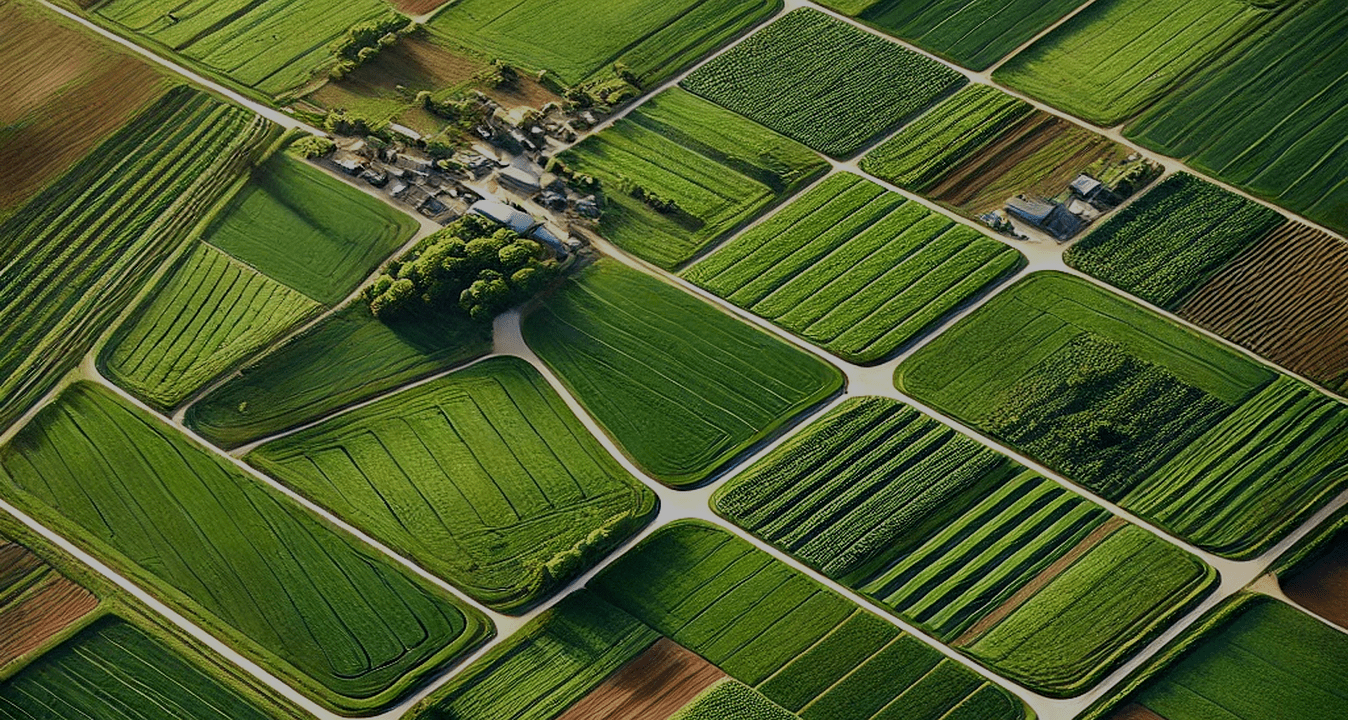

Spring is always a bit of a lottery in agriculture. We all want to get out into the fields early, take advantage of every window of good weather, and give our crops a good start. But at this time of year, the soil is often still wet. Agricultural machinery cannot access some plots, or can only do so at the cost of ruts, soil compaction, and unnecessary stress. And when you wait, sometimes you wait too long, and the intervention is no longer as effective as it could be.
In recent years, drones have shown that they can handle spraying while the tractor is stationary. However, when it comes to spreading fertilizer, things have long been a little different, mainly due to capacity. Spreading larger quantities meant frequent refilling, a lot of movement, and performance that made more sense for smaller doses or in specific scenarios. The DJI Agras T100 is the first model where it can be said without exaggeration that drone spreading is finally becoming a full-fledged technology, not just an additional function.
The T100 changes the rules of the game
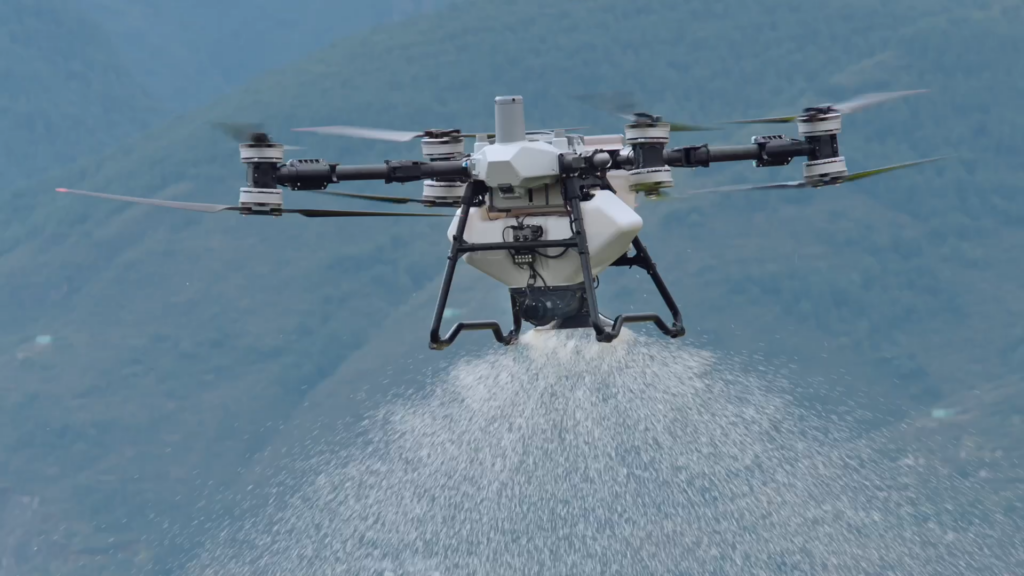
The most interesting thing about the T100 is that it solves exactly what has been the most difficult aspect of spreading so far – capacity and performance in one. The drone can carry up to 100 kg of material in a 150-liter spreading tank. In practice, this means fewer landings, less refueling, and more work per flight. Add to that a maximum material output of up to 400 kg per minute, and it’s clear why the T100 is attracting so much attention.
DJI tested the spreading system on multi-component fertilizers, and under ideal conditions, the T100 can spread approximately 2.5 tons of material per hour. Of course, the reality always depends on the dose per hectare, refueling logistics, and plot size—but the fact remains that we are talking about performance that can be taken seriously even on larger areas.
Why speed matters: what is the practice in the field?
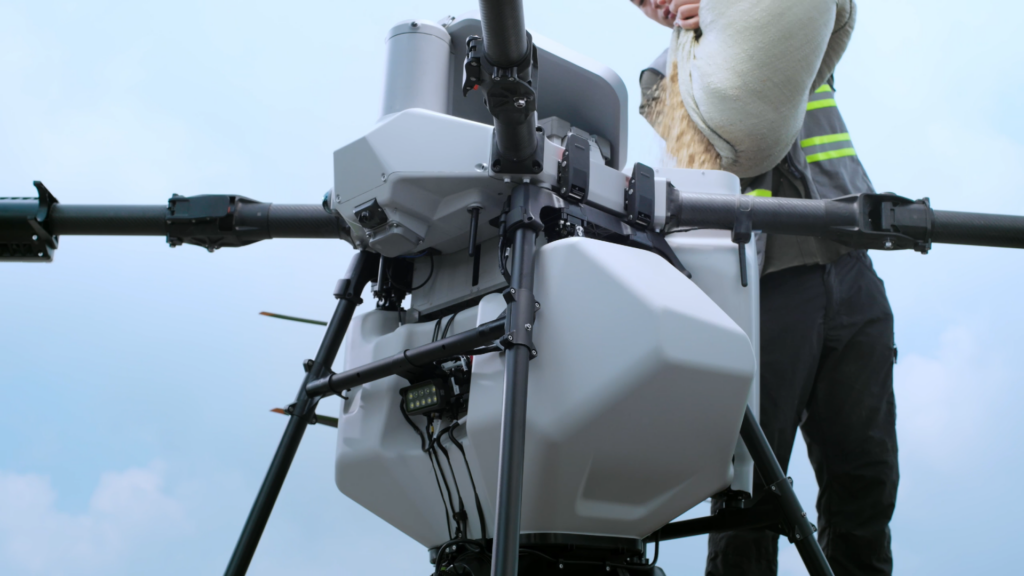
As with spraying, the rhythm of work is crucial when spreading. How often do you need to refill? How quickly can you refill? How far apart are the plots? The T100 is designed to save time at every step. For example, at maximum output, it can spread a 50 kg bag of fertilizer in approximately 9 seconds. This is precisely one of the things that will save you hours of time during the season.
It is also interesting that the drone can operate at high speeds even when fully loaded. When spreading, we are talking about a working speed of up to almost 50 km/h. This is a huge advantage for large and long areas – less time for flying and higher performance per shift.
Wet soil without compromise: no tracks, no compaction
The main advantage of drone spreading – especially with such a powerful machine as the T100 – is simple: its deployment options are not dependent on soil conditions. It does not create ruts, compact the soil, or leave tracks that then affect the yield and water regime of the plot throughout the year. In practice, this often means that you can fertilize earlier, exactly when it is most appropriate, rather than when soil conditions allow.
This is precisely the difference you will notice after the first season: not only the speed of intervention, but also the fact that the field remains free of unnecessary stress and damage to the soil structure. And that is a benefit that is very difficult to catch up with once it has been lost.
Less work, lower operating costs
When spreading can be done quickly, the economics of the work also change. Less refilling means less downtime, fewer trips, and often a smaller team. In addition, drones eliminate some of the costs associated with driving across fields—from fuel and equipment wear and tear to unexpected costs incurred by heavy equipment on wet soil.
Spreading without damaging vegetation: undersowing and intercropping
Spreading with drones is not just about fertilizers. In practice, undersowing and intercropping are also becoming increasingly common – whether for soil protection, organic matter, or better water management. Drones have a big advantage here: they can apply seeds or granulated products without damaging existing vegetation or compacting the soil by driving over it. For some crops and at certain times of year, this is literally the only way to get into the vegetation without causing damage.
New features ensuring reliable application
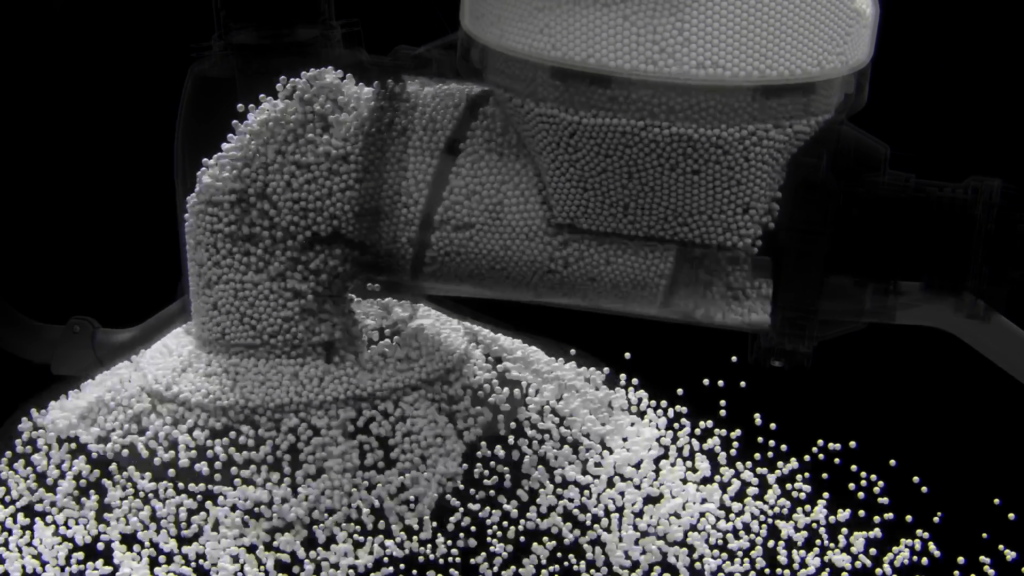
The T100 spreading module is a complex device. It consists of several motors and sensors, and its core is a screw feed system that ensures smooth and stable dosing even under heavy loads. The high-torque motor also plays an important role, ensuring that the feeder can handle the load even when the tank is completely full and in continuous operation.
Added to this is a precise weight sensor that evaluates in real time how much material remains in the hopper. This telemetry forms the basis for the drone to maintain the set dose throughout the entire job. The result is even coverage – consistent strips without over- or under-fertilized areas. The modern centrifugal spreading disc helps cover more area per pass – with an adjustable working width of 3 to 10 meters.
Different materials and feed rates: screw conveyors for every application
The T100 supports four sizes of interchangeable feeders, allowing it to be adapted to different materials – from fertilizers to small seeds and granular preparations. This is not a “toy,” but a practical feature: coarse granules behave differently than fine seeds. Replacing the feeder is a way to avoid compromises and maintain application quality even with different types of material.
In practice, an extra-large feeder is most commonly used for standard granular fertilizers, but for specific materials, it makes sense to use smaller or optional variants. The advantage is clear: one platform covers multiple scenarios without improvisation. Available options include:
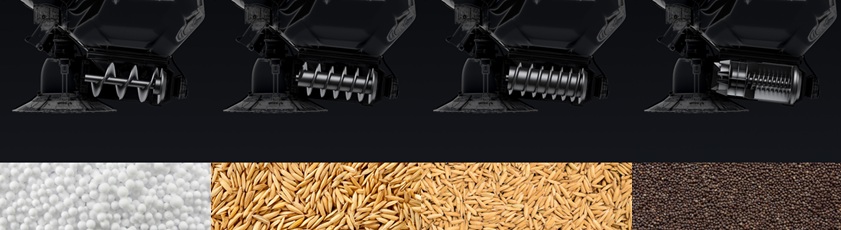
Extra large feeder
for granules such as fertilizers, wheat seeds, granular fungicides, feed
Larger (optional)
Suitable for rice seeds, cover crops, etc.
Middle feeder
suitable for rice seeds and similar granules
Small (optional)
for finer materials such as rapeseed, grass seed, granular herbicides/insecticides
Variable fertilization
An interesting and rapidly developing area is variable fertilization, where the dose is not the same everywhere but is adjusted according to the appearance of the vegetation. NDVI maps, which can be obtained using the DJI Mavic 3 Multispectral drone, can serve as a basis for this, showing areas with better and poorer growth. This has the potential to reduce fertilizer consumption where it has no effect and, at the same time, to more accurately support areas where it makes sense. In addition to saving inputs, this also brings environmental benefits – fewer over-fertilized areas mean less nutrient loss to the environment.
The T100 is ideal for this type of work because it can handle large batches and fast work, while also featuring systems that keep the batch under control.
Conclusion
The DJI Agras T100 takes spreading to a whole new level of real productivity. With a capacity of up to 100 kg, a 150-liter tank, a maximum spreading flow rate of 400 kg/min, and a performance that allows you to spread approximately 2.5 tons per hour under ideal conditions, it fundamentally changes logistics in the field. Add to that the ability to work even when the soil is still wet, and you have a tool that can save farmers time, worry, and money—without compacting the soil and without unnecessary passes.
To get the most out of the T100, it is also important to set the correct doses, choose the right feeder for the material, and organize refilling efficiently. Enterra can help you with this – from configuring the spreading system and training to setting up the workflow for your fields.